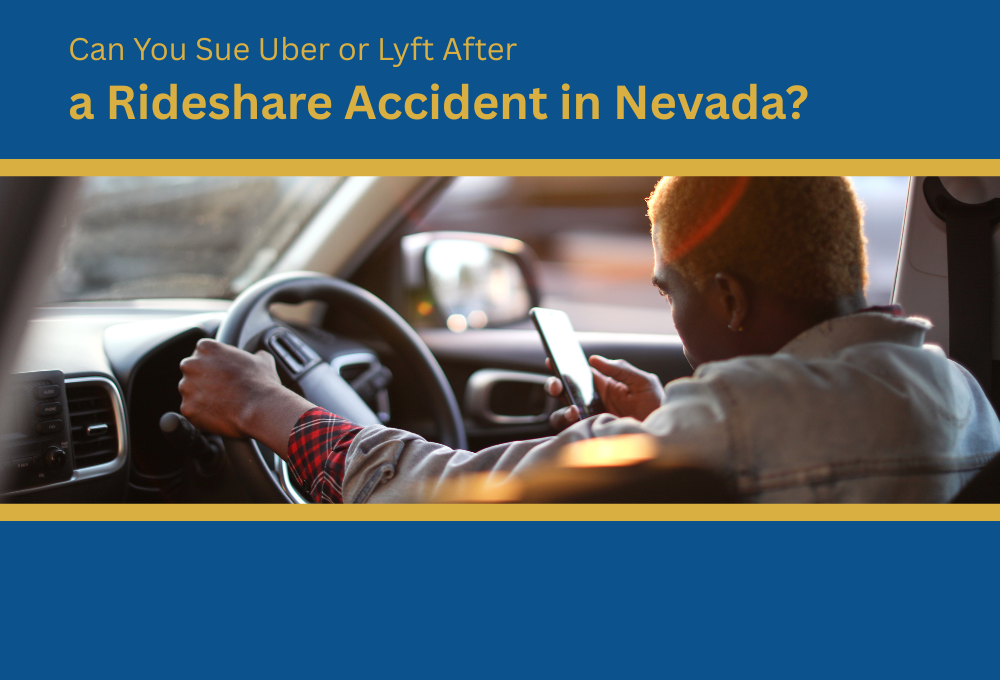
Rideshare services like Uber and Lyft are now part of everyday life in Nevada. People rely on them for work, travel, and late-night transportation across Las Vegas. When a crash happens during a rideshare trip, injuries can be serious, and the legal questions can feel overwhelming.
Unlike standard car accidents, rideshare crashes involve more than just two drivers. The rideshare company, the driver’s status, and multiple insurance policies may all affect who is responsible. This complexity leaves many injured victims unsure of their rights.
This article explains whether you can file a rideshare accident lawsuit after an Uber or Lyft crash in Nevada. It covers how liability works, what insurance applies, and when legal action may be possible.
How Rideshare Accidents Work Under Nevada Law
A rideshare accident lawsuit differs from a typical car accident claim because Uber and Lyft drivers are classified as independent contractors. This classification allows rideshare companies to avoid direct responsibility in many situations and shifts liability toward insurance coverage rather than employer responsibility.
Liability depends heavily on what the driver was doing at the time of the crash. Whether the driver was offline, waiting for a ride request, or actively transporting a passenger changes which insurance policy applies. Nevada law allows injured victims to pursue compensation, but identifying the correct coverage requires careful review and accurate trip data.
Because of these distinctions, many injured riders and drivers speak with a Las Vegas vehicle accident attorney to understand how a rideshare accident lawsuit applies to their specific situation and to avoid mistakes that could limit recovery.
Can You Sue Uber or Lyft Directly After a Crash?
Many people ask whether Uber or Lyft can be sued directly after a rideshare accident. In most cases, claims are handled through insurance rather than direct lawsuits against the company.
Uber and Lyft provide liability coverage that applies when a driver is logged into the app or transporting a passenger. These insurance policies often cover injuries caused by driver negligence. As a result, compensation usually comes from insurance rather than from the company itself.
Direct lawsuits against Uber or Lyft may still be possible in limited situations. These cases may involve negligent hiring, failure to conduct proper background checks, or app-related safety issues. These claims require strong evidence and legal experience to pursue successfully.
Key Factors That Affect a Rideshare Accident Lawsuit
Several factors determine whether a rideshare accident lawsuit succeeds and how compensation is handled.
Driver Status at the Time of the Accident
Driver status is the most important factor in rideshare cases. If the driver was actively transporting a passenger or on the way to pick one up, Uber or Lyft’s full insurance coverage typically applies. If the driver was logged into the app but had not accepted a ride, lower coverage limits may apply. If the driver is offline, only personal auto insurance is available. App records and trip data are critical in determining this status.
Who Caused the Accident
Fault still plays a major role in a rideshare accident lawsuit. If the rideshare driver caused the crash, their applicable insurance policy applies. If another driver caused the accident, that driver’s insurance becomes the primary source of compensation. Nevada follows a modified comparative negligence rule. Compensation may be reduced if you share fault. If your responsibility exceeds fifty percent, recovery may be barred.
Type of Injured Party
Passengers, pedestrians, cyclists, and other drivers may all be injured in rideshare accidents. Passengers often have stronger claims because they rarely share fault. These liability questions often resemble those seen in premises liability and accident cases, where control and responsibility determine accountability.
What Compensation Is Available After a Rideshare Accident?
A rideshare accident lawsuit may include both economic and non-economic damages. Economic damages cover medical bills, lost wages, rehabilitation costs, and future treatment needs related to the crash. These losses are supported by medical records, billing statements, and employment documentation that show how the injuries affected your ability to work and function.
Future damages also matter. Serious rideshare accidents may require ongoing medical care, physical therapy, or long-term pain management. In some cases, injuries limit a person’s ability to return to the same type of work. These projected losses can significantly increase the overall value of a claim when properly documented.
Non-economic damages address pain, emotional distress, and loss of enjoyment of life. These damages often form a large portion of compensation in serious injury cases, especially when injuries affect daily routines, sleep, or personal independence. Insurance companies frequently attempt to minimize payouts, particularly for non-economic losses. Reviewing similar injury discussions on the firm’s blog can help injured victims understand how compensation values vary based on injury severity and long-term impact.
Why Legal Guidance Matters in Rideshare Accident Cases
Rideshare accidents involve layered insurance policies and complex liability questions. Without guidance, injured victims often struggle to determine which insurer applies, what coverage limits are available, and whether an offer reflects the full scope of their losses.
Legal professionals analyze insurance tiers, driver status, and fault evidence. They understand how rideshare accident lawsuits fit within broader practice areas and how to counter common insurance defenses used to delay or reduce compensation.
Cases involving serious injuries, disputed fault, or multiple insurance carriers benefit most from experienced legal support. These situations require careful handling under Nevada law, clear documentation, and a strategy that protects both immediate recovery needs and long-term financial stability.
We Stand With You After a Rideshare Accident
Rideshare accidents can leave victims injured, overwhelmed, and uncertain about their next steps. Medical bills, time away from work, and unanswered questions about insurance often add stress during an already difficult time. Understanding your rights is critical, but each case requires careful evaluation based on the facts, injuries, and available coverage.
If you or someone you love was injured in a rideshare accident, reach out for guidance. Contact Lach Injury Law today for a free consultation. Our team serves clients throughout Las Vegas and nearby areas, providing personal attention and proven results. Let our firm protect your rights and help you move forward after a rideshare accident.